Welder at Work: A Designer’s Review for Craft Fairs
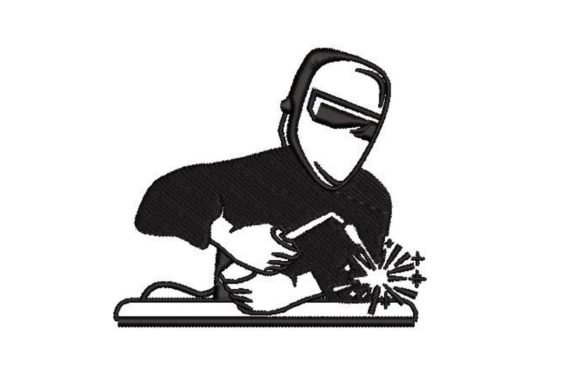
As an embroidery designer who spends weekends behind a booth table, I look at every new machine embroidery design through a specific lens. It is not just about whether the stitches are clean; it is about whether the design stops a shopper in their tracks. When I first loaded the Welder at Work file into my software, my immediate thought was about its potential as a niche, high-appeal product for the industrial and trade community. This is not a generic floral motif. It is a targeted, personality-driven graphic that speaks directly to a specific demographic: the skilled tradesperson and the families who love them.
The product description promises a "cute" addition to a husband’s working uniform, suggesting a playful yet respectful tone. For those of us running a small shop or selling as an Etsy seller, this duality is gold. It allows us to create items that are both functional workwear accessories and sentimental gifts. In this review, I will break down how Welder at Work performs across various mediums, from rugged aprons to delicate tea towels, and what you need to know before turning this digital asset into a profitable craft fair product.
First Impressions and Visual Appeal
The initial visual impact of Welder at Work is bold and recognizable. In a sea of farmhouse florals and minimalist typography at a local market, a design that celebrates manual labor stands out. It feels modern, slightly rustic, and undeniably masculine without being aggressive. The "cute" aspect mentioned in the description likely comes from the stylization of the welder figure—perhaps a simplified silhouette or a charming iconographic approach rather than a photorealistic portrait. This simplification is crucial for embroidery, ensuring that the design remains legible even when scaled down for smaller items like patches or caps.
For a craft fair booth, visual clarity is everything. Shoppers scan tables quickly. A design that is instantly understandable as "welding" or "trade work" creates an immediate connection. If you have customers who are spouses, parents, or children of welders, this design acts as a beacon. It signals that your brand understands their world. This emotional connection drives sales far more effectively than generic decor.
Product Versatility and Market Fit
One of the strongest attributes of this design is its versatility across different fabric types and products. Here is how I envision using Welder at Work in a real-world production scenario:
- Apron Embroidery: This is arguably the best use case. A heavy canvas or denim apron embroidered with this design becomes a premium gift for Father’s Day or holidays. The sturdy fabric supports the stitch density well, and the placement on the chest pocket or upper bib looks professional.
- Tote Bag Design: Canvas tote bags are staples at craft fairs. Placing this design on a natural or dark navy tote creates a stylish, everyday carry-all for tools or library books. It transforms a basic bag into a statement piece.
- Embroidered Patch: Patches are low-commitment impulse buys. Because the design is likely compact, it works beautifully as an iron-on or sew-on patch. These can be displayed in a dedicated section of your booth, appealing to younger buyers or those who want to customize their own jackets.
- Tea Towel Embroidery: For a softer touch, stitching this onto a waffle-weave or flour sack towel adds a whimsical element to the kitchen. However, you must be cautious with stitch density here to avoid puckering the lightweight fabric.
- Caps and Hats: A curved cap surface presents challenges, but a simplified version of this design can look fantastic on the front panel of a trucker hat or baseball cap. It appeals directly to the end-user—the welder themselves.
When creating your printable mockup for online listings, ensure you show the design on these varied backgrounds. An Etsy seller knows that showing the design on a dark shirt versus a light apron helps customers visualize the contrast and quality.
Production Practicalities and Technical Notes
While the aesthetic appeal is strong, the practical side of production requires careful attention. As a designer, I always advise testing any new digital embroidery file before committing to batch production. Here are the critical technical considerations for Welder at Work:
Stitch Density and Fabric Texture: Welding imagery often implies sparks or heavy gear, which can translate to dense stitching in some designs. High stitch density on thin fabrics like standard tea towels can cause pulling or distortion. Always use a appropriate stabilizer. For lightweight fabrics, a cut-away stabilizer is often safer than tear-away to maintain shape after washing. For thick fabrics like denim aprons, ensure your needle is heavy enough to penetrate without breaking.
Thread Colors and Contrast: The success of this design relies heavily on thread choice. If the design includes sparks or flames, vibrant oranges and yellows against a dark background pop beautifully. However, if you are stitching on a dark uniform, ensure the outline threads are bright enough to be seen from a distance. Test your thread colors on scrap fabric first. What looks good on screen may look muddy in person if the contrast is insufficient.
Hoop Size and Scaling: The description notes that the file comes in multiple formats, but it does not specify exact hoop sizes. You must check the dimensions in your embroidery software. If the design is too large for a 4x4 hoop, you may need to resize it for smaller items like patches. Be aware that resizing too small can cause tiny details to merge or disappear. If the design has small lettering or intricate spark details, verify that they remain clear at your intended size.
Curved Surfaces: If you plan to embroider this on caps, remember that the surface is curved and unstable. Use a cap frame and consider simplifying the design if it has wide, flat areas that might pucker on the curved panel.
Boosting Sales and Brand Consistency
Incorporating Welder at Work into your lineup can strengthen your brand’s identity as a maker of thoughtful, personalized goods. It shows that you cater to diverse interests beyond traditional decor. For a craft fair, this design can anchor a "Trades & Tools" section of your booth. Pair it with other industrial-themed items to create a cohesive display that attracts a specific, loyal customer base.
From a commercial perspective, this design is ideal for creating high-margin finished products. An embroidered apron costs relatively little in materials but can be sold at a premium due to the customization and perceived effort. As a small shop product, it differentiates you from mass-produced retailers. Buyers at handmade markets are looking for uniqueness, and a well-executed embroidery piece delivers that value.
Before selling, confirm the commercial licensing terms included with your purchase. Most designers allow for physical product sales, but restrictions on sharing the digital file itself are standard. Ensure you are compliant to protect your business.
Final Verdict for Makers
Welder at Work is a strong contender for any embroidery business looking to expand into niche, gift-oriented markets. It balances charm with ruggedness, making it appealing to both the wearer and the gift-giver. By paying attention to fabric choice, stabilizer selection, and thread contrast, you can produce high-quality items that stand out in a crowded marketplace. Whether you are an experienced Etsy seller or a weekend craft fair vendor, this design offers a practical, profitable avenue for creating memorable handmade products.