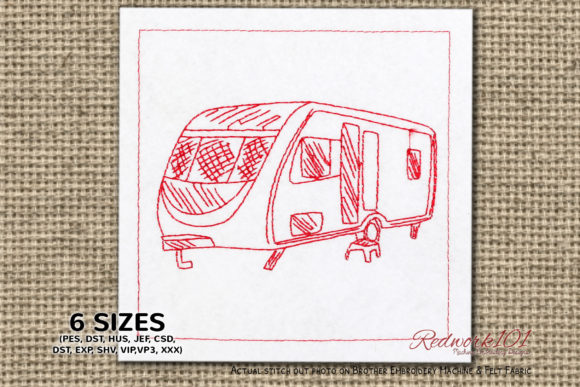
Parked Camper Lineart: A Designer’s Review
As an embroidery designer who spends countless hours digitizing and testing files for commercial use, I have learned that not all machine embroidery design assets are created equal. Some are cluttered with unnecessary jumps, while others lack the structural integrity needed for washable garments. Recently, I explored the Parked Camper Lineart available on Creative Fabrica, evaluating it not just as a digital asset, but as a viable component for real-world handmade products. For those of us running small businesses or selling on platforms like Etsy, the difference between a good file and a great one often comes down to stitch quality and versatility.
First Impressions and Visual Appeal
The first thing that strikes you about Parked Camper Lineart is its clean, minimalist aesthetic. In a market saturated with overly complex, high-density designs, this piece offers a refreshing breath of fresh air. The line art style suggests a modern, rustic charm that aligns perfectly with current trends in outdoor-inspired decor and apparel. It captures the essence of adventure without feeling heavy or dated.
The description notes that the Box Stitch shown in promotional images is optional. This is a crucial detail for professional users. It means the core design is flexible. You are not locked into a specific framing device, allowing you to adapt the camper motif to various hoop size constraints. Whether you are working with a 4x4 inch hoop for a cap or a larger frame for a tote bag, the ability to omit the border gives you creative freedom. The visual mood is calm and inviting, making it an excellent choice for customers who appreciate subtle, understated branding on their custom apparel or home goods.
Practical Application in Commercial Projects
When considering a new embroidery file for my shop, I always ask: "Where does this belong?" For Parked Camper Lineart, the answer is nearly everywhere in the lifestyle and outdoor niche. Here is how I envision this design performing in actual production scenarios:
- Tote Bags and Canvas Goods: The linear nature of the design works beautifully on textured fabrics like canvas or linen. The open spaces in the line art prevent the fabric from puckering, which is a common issue with dense fills on heavy materials.
- Sweatshirt Embroidery: Placed on the left chest of a hoodie or crewneck, this design adds a touch of personality without overwhelming the garment. It appeals to the growing market of cottagecore and van-life enthusiasts.
- Embroidered Patches: Because the design is self-contained and likely relies on clear outlines, it is an ideal candidate for creating iron-on or sew-on patches. These can be sold as standalone accessories or used to embellish denim jackets.
- Kitchen Towels and Aprons: For boutique merchandise, this camper motif fits seamlessly into a rustic kitchen collection. It pairs well with natural fiber threads and earthy thread colors.
The versatility of this Creative Fabrica embroidery asset means it can anchor an entire product line. From nursery decor featuring a whimsical camping theme to adult personalized gift items, the design scales well across different demographics.
Technical Considerations for Stitching
While the aesthetic is appealing, the technical execution is what determines whether a design is profitable. A pretty picture does not always translate to a smooth stitching experience. Here are the practical factors I consider when reviewing Parked Camper Lineart for production.
Fabric and Stabilizer Selection
Line art designs can be tricky on stretchy fabrics if the digitizing does not account for pull compensation. If you are applying this to a t-shirt or a baby blanket, using a cut-away stabilizer is non-negotiable to maintain the shape of the lines. For woven fabrics like cotton twill or linen, a tear-away stabilizer may suffice, but always test on scrap fabric first. The description mentions that the color of the outer box is different, implying potential color changes. Ensure your machine settings are optimized for these transitions to avoid thread nests or loose tails.
Stitch Density and Texture
One of the advantages of line art is typically lower stitch density compared to full-fill designs. This reduces production time and thread consumption, which directly impacts your profit margin. However, you must inspect the small details after stitching. Are the running stitches too long? Do they snag easily? If the design utilizes a running stitch for the outline, ensure it is dense enough to look solid but not so dense that it perforates delicate fabrics. If there are any fill areas, check if they use a satin stitch or a fill stitch, as this affects the texture and durability of the finished product.
Working with Dark and Curved Surfaces
If you plan to offer this on dark fabrics, you may need to add an underlay or adjust the thread colors for visibility. The contrast is key to the line art style. Additionally, if you are applying this to curved surfaces like caps, the optional box feature might need to be removed to prevent distortion. Always compare light and dark fabric mockups before listing items for sale to ensure the design remains legible and attractive.
Enhancing Product Value and Brand Consistency
Using high-quality design assets like Parked Camper Lineart contributes significantly to buyer trust. When a customer receives a handmade product with clean, professional stitching, they are more likely to leave positive reviews and return for future purchases. This design supports brand consistency for shops focused on outdoor, travel, or rustic themes. It allows you to create a cohesive look across various items, from tote bag design concepts to printable mockup listings.
Furthermore, the simplicity of the design makes it highly photogenic. In the world of online sales, particularly on Etsy, visual appeal drives clicks. A clean, crisp embroidery design photographs better than a messy, over-stitched one. This can lead to higher customer engagement and conversion rates. By choosing reliable files, you reduce the risk of production errors, ensuring that every item you ship meets your quality standards.
Final Verdict and Best Practices
Before integrating Parked Camper Lineart into your commercial workflow, there are essential steps to take. First, verify the file details on the Creative Fabrica product page. Since the provided description is brief, confirm the available formats (such as PES, DST, or JEF) to ensure compatibility with your specific embroidery machine. Check the license terms explicitly; while Creative Fabrica generally offers commercial use rights, it is vital to confirm any restrictions regarding mass production or specific platforms.
Second, perform a rigorous test stitch. Do not skip this step. Run the design on the same type of fabric you intend to sell. Check for thread breaks, tension issues, and overall alignment. If the design includes tiny lettering or intricate details, ensure they are readable at the intended size. Finally, consider the washing instructions. Advise your customers on how to care for their commercial embroidery items to preserve the longevity of the stitches.
In conclusion, Parked Camper Lineart appears to be a strong contender for designers looking to expand their Camping and outdoor-themed collections. Its flexibility, combined with the potential for low-density stitching, makes it a practical choice for a wide range of Embroidery projects. By approaching this file with a critical eye and adhering to best practices in stabilization and testing, you can transform a simple digital download into a best-selling handmade product. Always prioritize quality control, and let the clean lines of this design speak for themselves in your final creations.