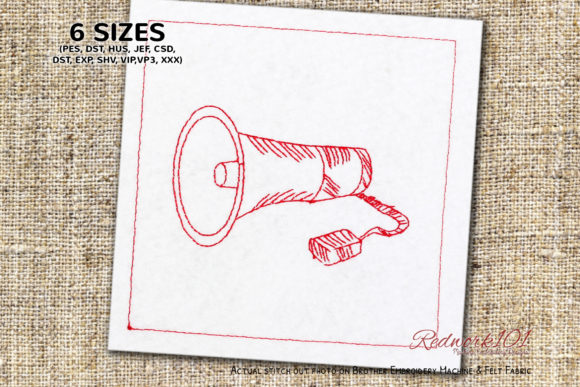
MegaPhone with Mouth Piece: A Designer’s Review
As an embroidery designer who has spent years digitizing and testing files for small business merchandise, I approach every new machine embroidery design with a critical eye. It is not just about whether the image looks cute on a screen; it is about how that design translates to fabric, withstands washing, and ultimately serves the brand identity of the client using it. Recently, I reviewed the MegaPhone with Mouth Piece, a redwork-style design categorized under Music and Embroidery. For boutique owners, Etsy sellers, and apparel decorators, this piece offers a unique blend of retro charm and communicative energy. Here is my professional assessment of its viability for commercial use.
First Impressions: Visual Personality and Style
The first thing that strikes me about the MegaPhone with Mouth Piece is its distinct aesthetic. Described as a lovely redwork embroidery, it immediately signals a vintage, handmade feel. Redwork is a classic technique that relies on single-color stitching, often in red, to create outline-based imagery. This simplicity is its greatest strength. In a market saturated with complex, multi-colored logos, a clean line-art design feels approachable, friendly, and decidedly artisanal.
For businesses in the creative sector—such as independent bookstores, music venues, or community theaters—this design communicates passion without shouting. It feels playful yet professional. The optional Box Stitch mentioned in the description adds a layer of versatility. If a brand needs a bolder presence, the box stitch can frame the megaphone, giving it weight. If they prefer a minimalist look, removing it allows the design to breathe. This adaptability is crucial for small business merch where one design must often work across various product types.
Real-World Applications for Small Business Merch
When evaluating a digital embroidery file for commercial embroidery projects, I always ask: "Where does this live on the product?" The MegaPhone with Mouth Piece is exceptionally versatile for several key items in a small business inventory.
- Embroidered Patches: This is perhaps the strongest application. Because redwork relies on outlines, it translates beautifully to merrowed-edge patches. A patch featuring this megaphone could be sold as a standalone accessory or used to customize denim jackets and tote bags. It acts as a badge of honor for anyone passionate about public speaking or music.
- Staff Uniforms and Aprons: For cafes, bakeries, or florists, staff aprons are walking billboards. Embroidering this design on the chest pocket area of a canvas apron adds a touch of personality. It suggests that the staff is ready to announce specials or engage with customers, fitting the "public speaking" theme of the design.
- Cap Embroidery: Placed on the side panel or even the front of a dad hat, the megaphone serves as a subtle brand accent. However, due to the curved surface of a cap, the scale must be adjusted carefully to ensure the lines do not distort.
- Tote Bag Design: Canvas tote bags are staples for handmade brands. A large-scale version of this design, centered on the bag, creates a striking visual. The simplicity of the line work ensures it remains legible even from a distance.
Technical Considerations and Production Notes
While the artistic merit is high, the technical execution requires attention to detail. As a designer, I advise checking several factors before running this embroidery file on production machines.
Stitch Density and Fabric Texture: Redwork designs typically have lower stitch density than fill-stitch designs. This is excellent for lightweight fabrics like cotton tees or linen tote bags, as it prevents puckering. However, on textured fabric or heavy fleece, the thin lines might get lost. I recommend testing the design on the specific material you intend to use. If the fabric is too plush, the details of the mouthpiece may disappear.
Thread Colors and Contrast: The description notes that the color is customizable. While traditional redwork uses red thread, do not feel bound by this. For a modern tech startup or a corporate event, black thread on white fabric offers high contrast and readability. For a softer, boutique feel, consider navy or forest green. Always create a printable mockup to show clients how different thread colors affect the visual impact.
Hoop Size and Scaling: Since the exact hoop size is not specified in the brief, you must verify the dimensions of the digital embroidery file. If you plan to use this as a small chest logo, ensure the design retains its integrity when scaled down. Tiny lettering or intricate details can become a tangled mess if the design is shrunk below its recommended minimum size. Test it in black and white first; if the lines merge in monochrome, they will likely merge in color too.
Stabilizer Selection: For items that need frequent washing, such as staff uniforms or customer gifts, proper stabilization is non-negotiable. Use a cut-away stabilizer for knit fabrics to prevent distortion over time. For woven fabrics like tote bags or patches, a tear-away may suffice, but a light cut-away ensures the finished product maintains its shape after repeated use.
Brand Identity and Customer Trust
Why choose this specific design? It comes down to brand identity. In the world of small business merch, consistency is key. The MegaPhone with Mouth Piece helps build recognition. It is not just a decoration; it is a symbol of voice and community. When customers see this embroidered on a high-quality patch or a well-made apron, it signals attention to detail. It elevates a simple item into a collectible asset.
For Etsy sellers and crafters, offering products with this design can differentiate your shop. It appeals to a niche audience—musicians, speakers, teachers, and activists—who value expressive, handmade products. By using a professional-grade machine embroidery design, you assure buyers that the product is durable and well-crafted. This builds trust and encourages repeat business.
Final Verdict and Best Practices
The MegaPhone with Mouth Piece is a strong contender for any small business looking to add character to their branded merchandise. Its redwork style offers a timeless appeal that fits well with current trends favoring authenticity and handmade quality. However, success lies in the execution.
- Verify Licensing: Before selling any finished product, confirm the commercial licensing terms of the digital embroidery file. Ensure you have the right to use it for physical goods.
- Test on Real Fabric: Do not rely solely on screen simulations. Stitch out a sample on your actual inventory fabric. Check for spacing issues and thread breaks.
- Compare Design Assets: Place this design beside your existing logo or other design assets. Does it complement them? Visual consistency strengthens brand recognition.
- Consider the Optional Box Stitch: Decide if the box stitch adds value to your specific application. For patches, it might provide a necessary border. For direct-to-garment embroidery, it might be unnecessary bulk.
In conclusion, this design is more than just a picture of a megaphone. It is a tool for communication. When used wisely on caps, totes, aprons, and patches, it can amplify your brand’s voice. For the experienced embroiderer, it presents a fun, low-risk project with high reward potential in terms of customer engagement and product value. Just remember to respect the technical limits of the stitch count and fabric choice, and you will create a finished product that stands out in the marketplace.